
Himaland Adventure Holiday Pvt. Ltd.
(Nepal local trek/tour/retreat holiday expert over 25+ years)

 Talk to an expert
+977 9841135885
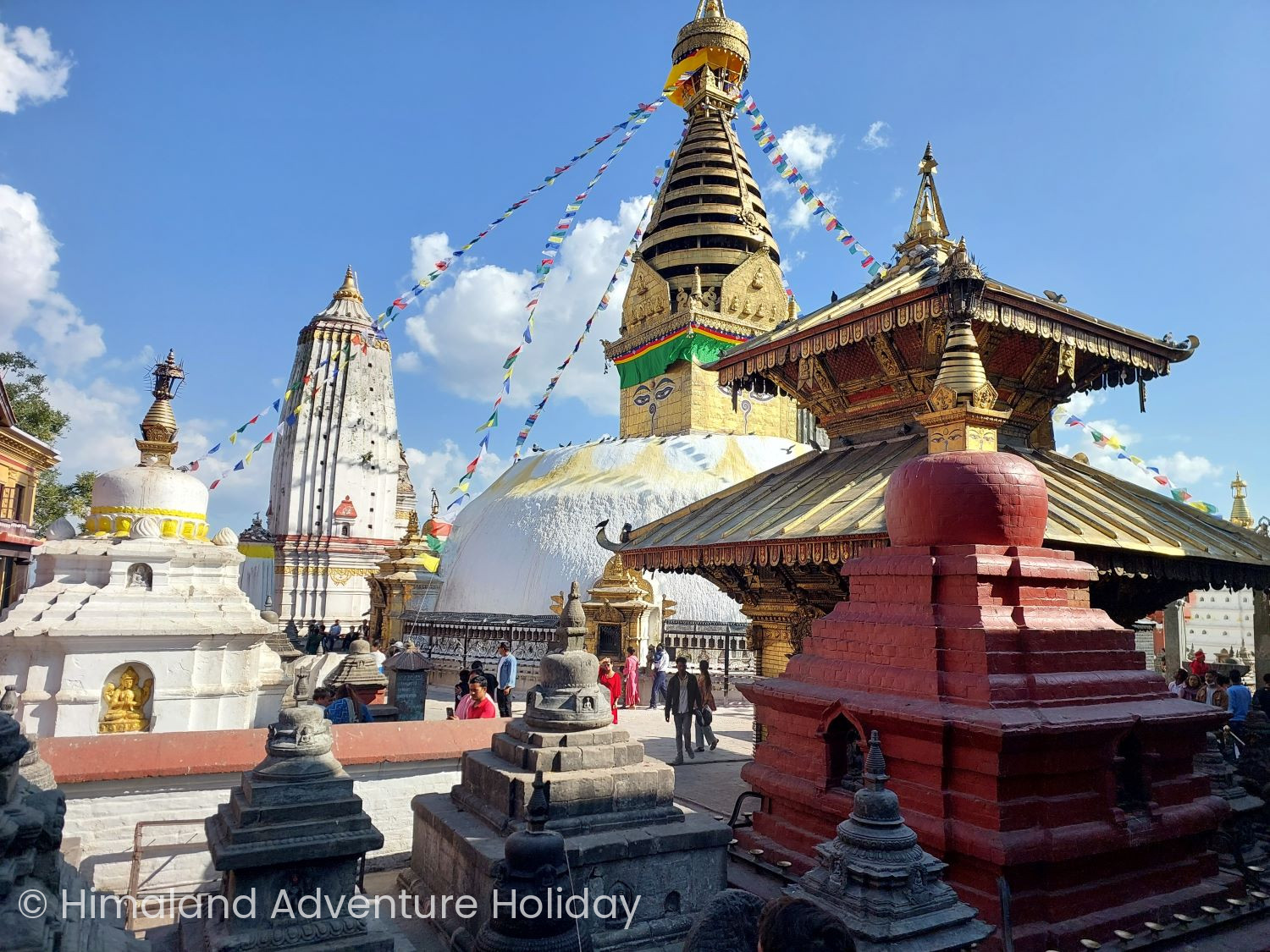
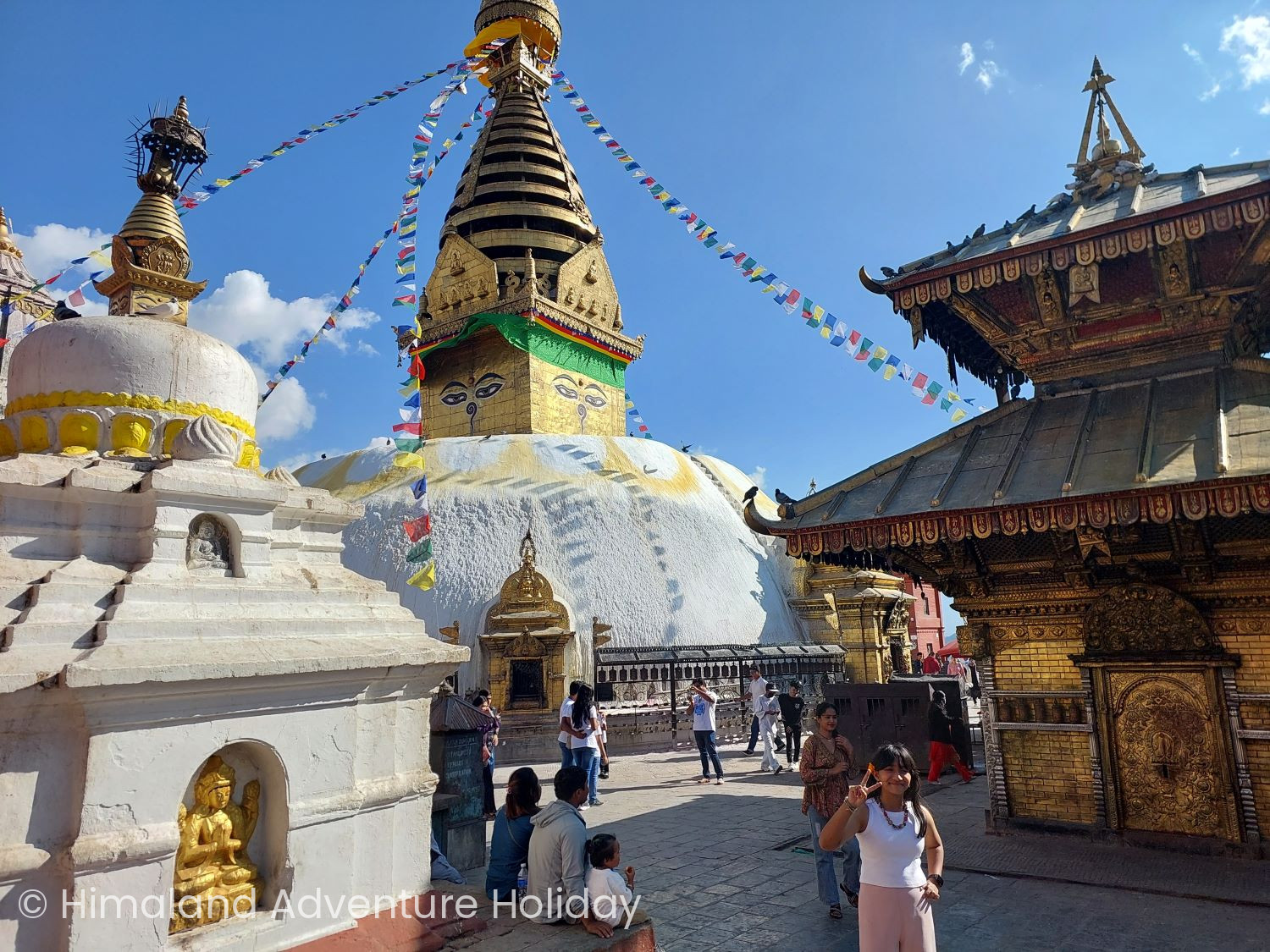

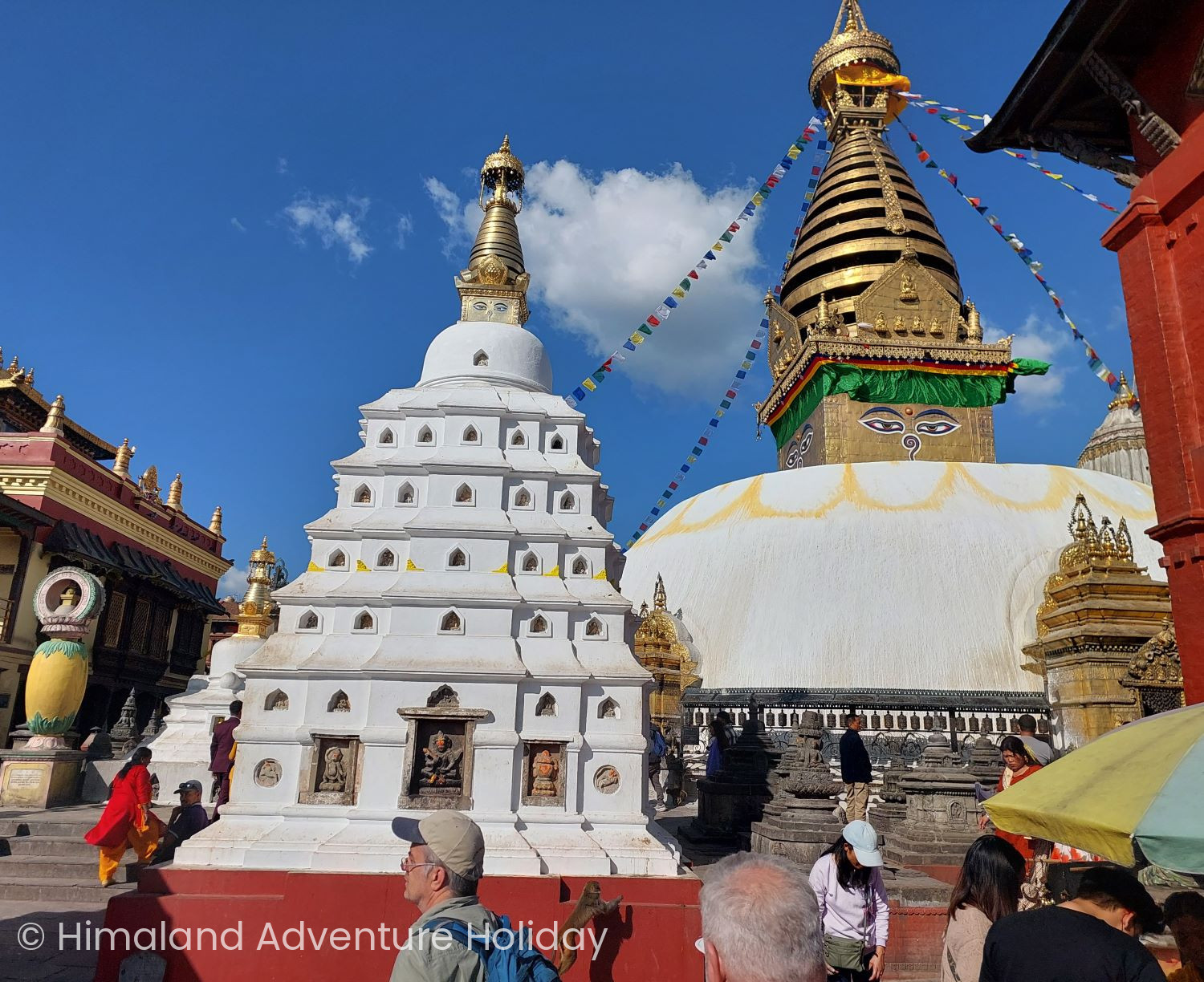
Swayambhu Stupa – The Self-Existent Stupa on the Sacred Hill
Trip Facts
Duration
01 Days
Group size
Min. Pax Requirement, 2 persons.
Best Time for Visit
All Season
Activity
Heritage Walk
Fitness Level
Easy
Time
4 hours
Start End
Kathmandu, Nepal
Overview
Swayambhu Stupa, also known as the Monkey Temple, is one of Nepal’s oldest and most sacred pilgrimage sites. Located on a hilltop overlooking Kathmandu Valley, it is a UNESCO World Heritage Site that blends Buddhist and Hindu traditions in a single spiritual landscape.
The site has remained an important center of worship for more than two thousand years. Pilgrims and travelers visit to meditate, pray, and experience its peaceful spiritual atmosphere.
History and Legend of Swayambhu Stupa
According to legend, Kathmandu Valley was once a lake. A lotus flower emerged in the center. Later, Manjushri drained the water, and the lotus transformed into the hill where the stupa now stands.
Historical records suggest the site existed as early as 460 A.D. during King Manadeva’s reign. Because of this deep heritage, the site holds both mythological and archaeological importance.
Great Stupa Architecture
The main stupa features a white dome and a golden spire that represents enlightenment. The Buddha eyes face in all four directions, symbolizing wisdom and protection over the valley.
Prayer Wheels and Spiritual Practice
Hundreds of prayer wheels surround the base of the stupa. Visitors spin them while chanting mantras such as “Om Mani Padme Hum.” This practice creates a continuous flow of spiritual energy throughout the site.
Shrines, Temples, and Sacred Spaces
The complex includes many shrines and chaityas dedicated to both Buddhist and Hindu deities such as Tara, Hariti, and Ganesh. This mix of traditions reflects Nepal’s unique spiritual harmony.
Buddha Statues and Hilltop Views
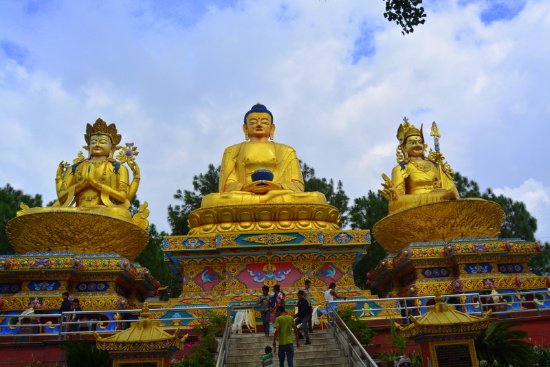
Several Buddha statues and sacred spaces surround the hill. The Manjushri shrine and Ajima temple add further spiritual depth. From the top, visitors also enjoy panoramic views of Kathmandu Valley.
Festivals and Cultural Events
Major festivals such as Buddha Jayanti, Saga Dawa, and Gunla are celebrated here. During these events, the site becomes highly vibrant with pilgrims, chanting, and traditional rituals.
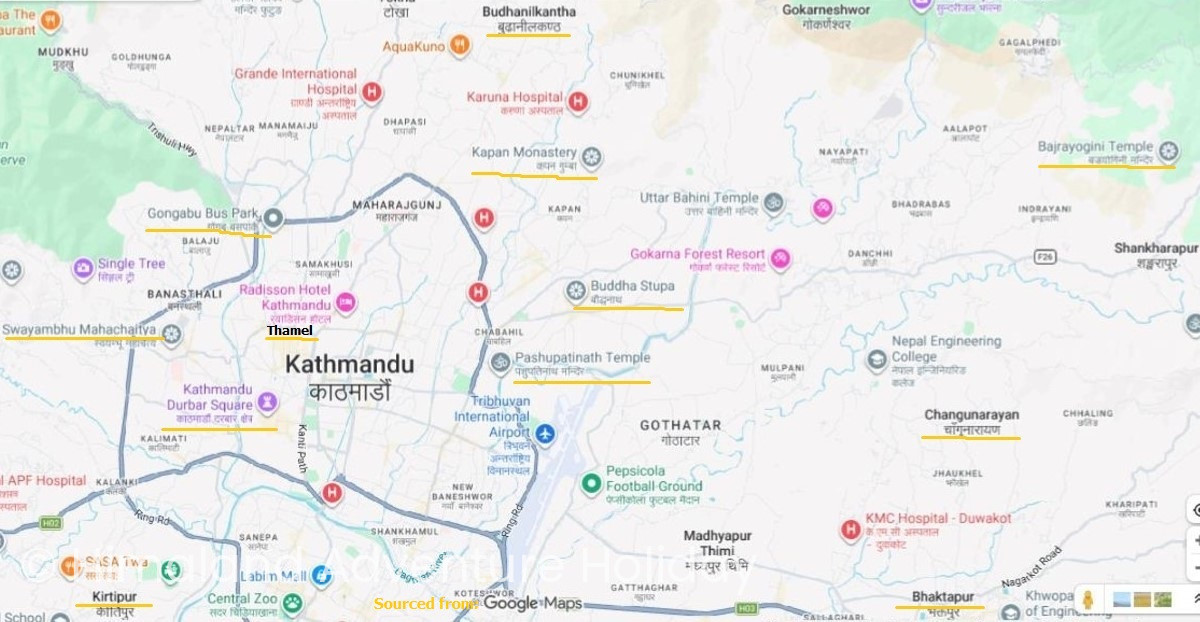
Map
Includes
Transfers by private taxi/ coach
Temple/Durbar entry fee
Local simple snacks
Temple entry fees
English and local language speaking guide
Excludes
Beverages
Tips for guide and drivers
Expenses of personal nature
Reviews
Enter a recent customer’s contact info and we’ll ask them to leave you a review.